
Maryland Area Codes at a Glance
Six area codes are live in Maryland today. Two of them, 301 and 410, are the historic pair. The other four are overlays added on top of them as numbers ran short. An overlay does not carve out new territory. It sits on the same map as the code it was added to, so the geography of Maryland is really split in two, not in six.
The western group is 227, 240, and 301. The eastern group is 410, 443, and 667. A phone company handing out a new line in Rockville can pull from any of the first three. A new line in Towson can come from any of the last three. That is the whole system in one sentence, and the table below fills in the dates and the ground each group covers.
| Area Code | Coverage | In Service | Overlay Status |
|---|---|---|---|
| 301 | Western Maryland, southern Maryland, and the Maryland suburbs of Washington | January 1, 1947 | Original code for the whole state, parent of 410 |
| 410 | Baltimore, central Maryland, and the Eastern Shore | October 6, 1991 | Split from 301, parent of 443 and 667 |
| 240 | Same territory as 301 | June 1, 1997 | Overlay on 301 |
| 443 | Same territory as 410 | June 1, 1997 | Overlay on 410 |
| 667 | Same territory as 410 and 443 | March 24, 2012 | Overlay on the eastern group |
| 227 | Same territory as 240 and 301 | June 14, 2023 | Newest overlay, on the western group |
Which Maryland Counties Use Which Codes
County lines are the practical way to read the map. The Public Service Commission named the counties served by 240 and 301 when it announced the 227 overlay, and the eastern group covers most of what is left. A few counties straddle the boundary, which is normal for a border drawn around telephone exchanges rather than around county borders.
- 227, 240, 301 - Allegany, Garrett, Washington, Montgomery, Prince George's, Charles, and St. Mary's counties
- 227, 240, 301 in part - portions of Frederick, Howard, Carroll, and Anne Arundel counties
- 410, 443, 667 - Baltimore City, Baltimore County, Harford, Calvert, and most of Anne Arundel, Carroll, and Howard
- 410, 443, 667 on the shore - Caroline, Cecil, Dorchester, Kent, Queen Anne's, Somerset, Talbot, Wicomico, and Worcester counties
Cities follow the same pattern. Bethesda, Rockville, Silver Spring, Gaithersburg, Germantown, College Park, Greenbelt, Frederick, Hagerstown, Cumberland, and Waldorf all sit in the western group. Baltimore, Towson, Annapolis, Salisbury, and the Chesapeake Bay communities sit in the eastern group.
Baltimore City is worth calling out on its own. It is an independent city, separate from Baltimore County, though both share the same three area codes.
Overlay and Split in Maryland
Maryland has been through both kinds of area code change, which makes it a useful example. The 1991 event was a split. Half the state kept 301 and the other half was moved to 410, and people in the new region had to change their numbers. Everything since has been an overlay, and nobody's number changed at all.
- Split
- The old code keeps part of the map. A new code takes the rest. Numbers in the new region change.
- Overlay
- A new code is added over the same map. Existing numbers stay put. New lines get the new code.
- Permissive dialing
- A grace period when both the old and new dialing patterns connect, before the shorter one is turned off.
Overlays are why 10 digits are required. Two neighbors can hold the same seven digits under two different codes, so the switch has no way to tell them apart without the full number.
Dialing Rule Across Maryland Area Codes
One rule covers the whole state. Local calls take 10 digits. Toll calls take 1 plus the 10 digits. Operator-assisted calls take 0 plus the 10 digits. The Public Service Commission approved that pattern for the western group when 227 was added, and the eastern group has worked the same way since 443 arrived.
Important: Seven-digit dialing has not worked in Maryland since the 1997 overlays. A call placed without the area code will not connect anywhere in the state.
Because of that history, the 2023 arrival of 227 required no change for anyone. The Commission made the point directly at the time: customers in the 240 and 301 region had already been dialing 10 digits for more than 20 years. The Maryland PSC telecommunications FAQ is where the state answers questions about it.
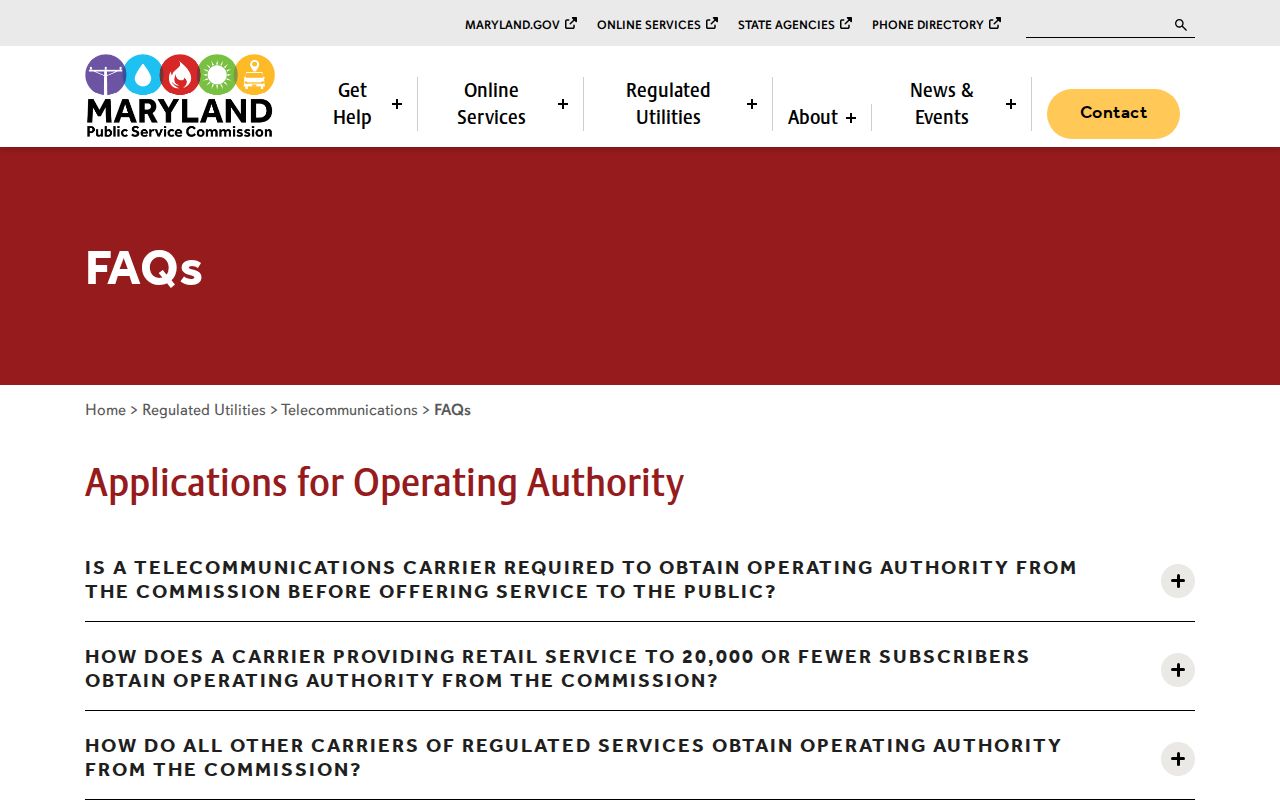
The same page handles landline service questions, which is the other half of what the Commission regulates on the phone side.
Short service numbers and star codes work differently from area codes and are covered under Maryland phone codes.
History of Maryland Area Codes
Maryland was one of the original numbering plan areas in 1947, and 301 covered every corner of it. That held for 44 years. Baltimore and the Washington suburbs grew, then fax machines, pagers, and eventually mobile phones ate through the supply of prefixes, and the state has been adding codes ever since.
| Date | Event |
|---|---|
| January 1, 1947 | 301 assigned to Maryland in the original numbering plan |
| October 6, 1991 | 410 enters service after splitting from 301 |
| June 1, 1997 | 240 overlay opens over 301 |
| June 1, 1997 | 443 overlay opens over 410 |
| March 24, 2012 | 667 overlay opens over 410 and 443 |
| June 14, 2023 | 227 overlay opens over 240 and 301 |
The 227 rollout left a small trace worth knowing about. Carriers could order codes in the new area code starting April 9, 2023, and the first lines could go live on June 14. A test number, 227-990-8378, ran from March through July of that year so carriers could confirm calls completed.
Prefixes Under Each Maryland Area Code
The three digits after the area code are the prefix, or NXX. Every one of them is assigned to a carrier and tied to a rate center, which is the billing area the telephone network uses. Maryland's busiest rate centers include Baltimore, Towson, Annapolis, Frederick, Gaithersburg, Catonsville, Salisbury, Pikesville, Glen Burnie, Columbia, Hagerstown, Waldorf, Aberdeen, Bel Air, and Cumberland.
The assignment records are public. NANPA publishes them by region, and Maryland sits in the Eastern South group with Virginia, West Virginia, the Carolinas, Georgia, Florida, Delaware, and Washington. Each row shows the state, the prefix, the carrier, the rate center, and the date it was assigned.
| Prefix | Carrier | Rate Center | Assigned |
|---|---|---|---|
| 227-203 | MCImetro Access Transmission Services | Frederick | August 15, 2023 |
| 240-203 | Omnipoint Communications | Hagerstown | October 4, 2011 |
| 301-208 | Verizon Maryland | Gaithersburg | Not listed |
| 443-202 | Cellco Partnership, doing business as Verizon Wireless | Baltimore | January 9, 2012 |
| 667-203 | Cellco Partnership, doing business as Verizon Wireless | Baltimore | February 8, 2012 |
Those records live on the NANPA central office code assignment page as downloadable workbooks.
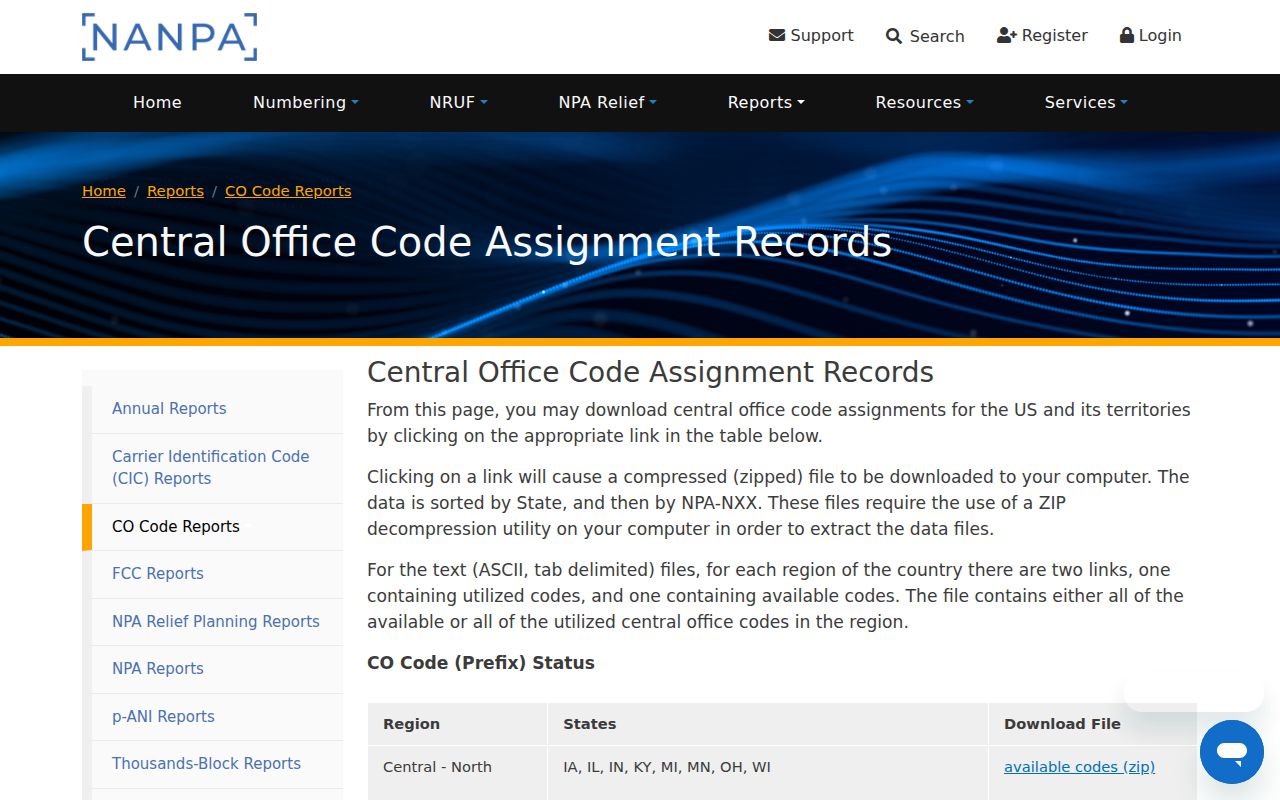
Pick the regional file, then sort by state and prefix to see the Maryland rows.
Why Maryland Area Codes Mislead
An area code used to mean something exact. It does not anymore. Number portability lets a customer keep a number while switching carriers, moving across town, or moving out of state entirely. A 410 number can ring in Arizona. A 301 prefix first handed to a Verizon landline in Gaithersburg can now belong to a mobile line or an internet-based service.
Overlays add a second layer of noise. Since any of three codes can be assigned in the same neighborhood, the code tells you which group of exchanges the number came from, not which town, and certainly not which street.
Scam callers use this on purpose. Neighbor spoofing puts a real Maryland area code and a familiar prefix on the caller ID so the call looks local. Treat the code as a weak hint and verify the number itself before trusting it.
Future Area Codes Planned for Maryland
No seventh code is on the way. NANPA's April 2026 projections put the 410, 443, and 667 group running out of prefixes in early 2036, and the 227, 240, and 301 group in early 2041. Those dates move as demand shifts, but neither is close enough to have triggered relief planning.
When the time comes, the process is set. NANPA runs the numbering side and publishes a planning letter with the ordering and in-service dates. The Public Service Commission approves the plan for Maryland and handles public notice. Residents would not have to do anything, because Maryland already dials 10 digits and a new overlay only affects numbers issued after it opens.
Verifying a Maryland Area Code
If a code looks wrong, check it against the source rather than a search engine. NANPA maintains the official maps and a lookup that returns the state and status of any code in the numbering plan. The FCC covers the policy side, including why 10-digit dialing exists and what the numbering plan actually is.
The NANPA area code map resources page is the fastest place to confirm a code and see its territory.
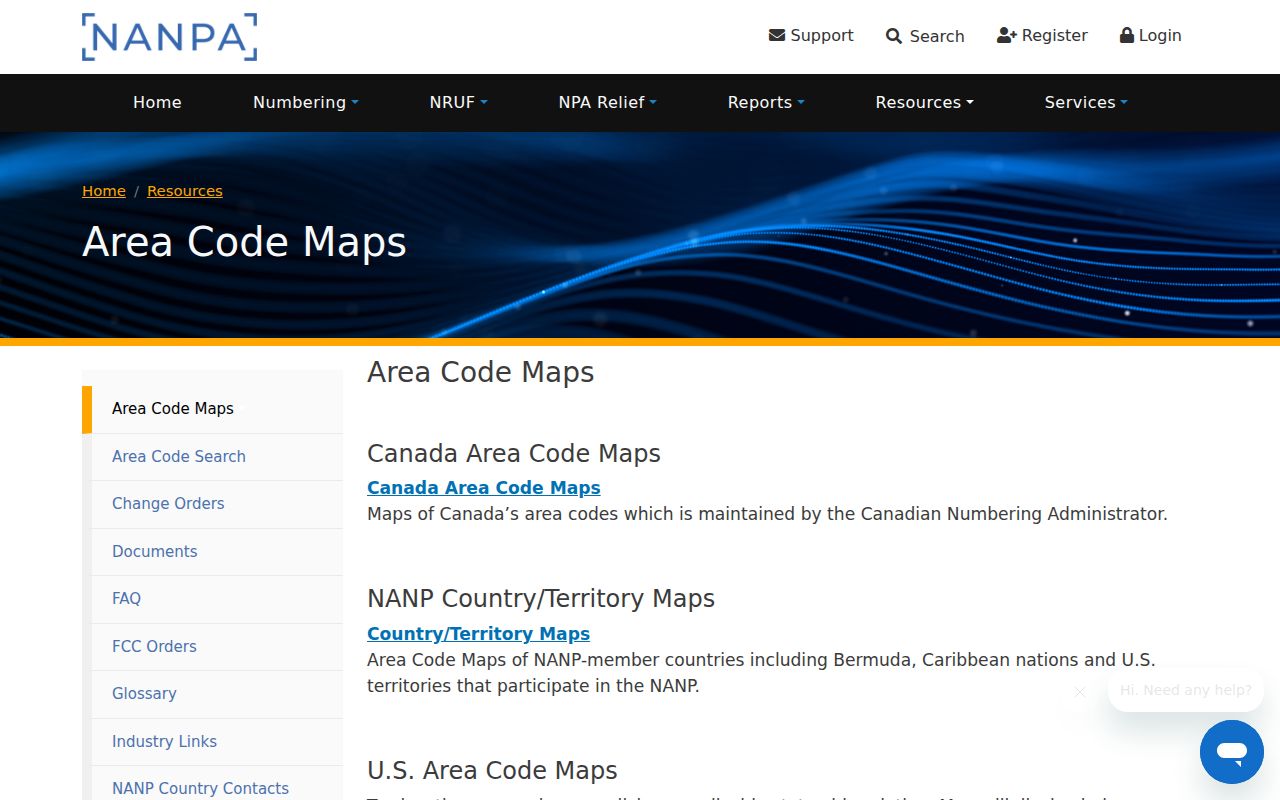
State maps and the numbering plan overview both start from that page, and the search form takes a bare three-digit code.
Note: A number that fails to connect is more often a wrong prefix than a wrong area code, since all six Maryland codes are active and reachable.